Virginia STEM Education Advisory Board
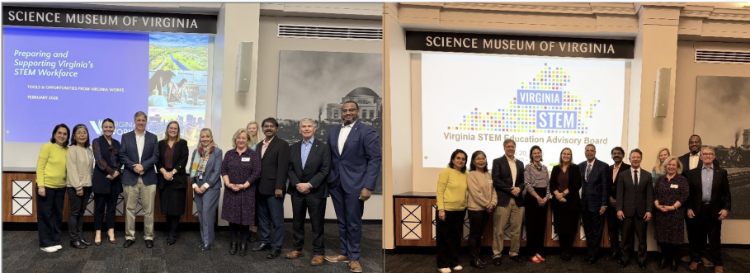
The Virginia Science, Technology, Engineering, and Mathematics (STEM) Education Advisory Board (the Board) is an established advisory board, within the meaning of § 2.2-2100, in the executive branch of state government. The purpose of the Board is to advise the Governor, Cabinet members, and the General Assembly on strategies to align STEM education efforts and report STEM education challenges, goals, and successes across the Commonwealth.
Powers and Duties of the Board
1. Create a unified vision regarding STEM education initiatives, language, and measures of success to promote a culture of collaboration for STEM programming in the Commonwealth.
2. Develop the infrastructure for creating STEM Regional Hubs and naming STEM Champions in communities across the Commonwealth to facilitate partnerships between organizations across regions and populations that will lead to increased cross-sector opportunities.
3. Advance and disseminate STEM curricular and professional development resources for formal and informal education.
4. Identify strategies to promote the participation of historically underrepresented students in STEM education. Such strategies shall include (i) identifying barriers to STEM participation for historically underrepresented students in elementary and secondary schools; (ii) developing recommendations for elective courses in secondary schools that expand hands-on STEM opportunities for all secondary school students; (iii) developing recommendations for elective courses in secondary schools that expand and promote hands-on STEM opportunities and STEM participation for historically underrepresented students; (iv) recommending changes to the Standards of Learning that promote the STEM-related contributions of historically underrepresented groups; and (v) collaborating with institutions of higher education and the private sector in the Commonwealth to educate students on and expand STEM pathways and opportunities in higher education, STEM careers, STEM internships, STEM fellowships, and other STEM enrichment programs.
5. Submit an annual report to the Governor and the General Assembly for publication as a report document as provided in the procedures of the Division of Legislative Automated Systems for the processing of legislative documents and reports. The chairman shall submit to the Governor and the General Assembly an annual executive summary of the interim activity and work of the Board no later than the first day of each regular session of the General Assembly. The executive summary shall be submitted for publication as a report document as provided in the procedures of the Division of Legislative Automated Systems for the processing of legislative documents and reports and shall be posted on the General Assembly's website.
B. The Board may apply for, accept, and expend gifts, grants, or donations from public or private sources to enable it to carry out its objectives.
2025 Virginia STEM Education Advisory Board Legislative Report
Virginia State STEM Education Definition
Virginia State STEM Education Definition: Science, Technology, Engineering, and Mathematics (STEM) education applies and/or integrates discipline-specific, content-learning experiences where academic and technical disciplines intersect. In STEM experiences, students engage in the design thinking process to create and communicate solutions to a spectrum of universal human challenges. The process of design thinking includes but is not limited to:
• defining and refining the problem or challenge;
• research and collecting information;
• brainstorming and analyzing solutions and ideas;
• develop solutions and build models or prototypes;
• present ideas, test solutions and collect feedback;
• collect and analyze data to evaluate the model or solution; and
• improve the design based on analysis.
STEM Education Advisory Board Members
STEM Board Members
Padmanabhan Seshaiyer (Ph.D.)- Board Chair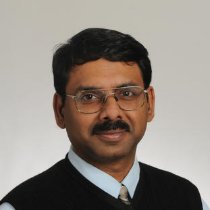
Dr. Seshaiyer is currently employed as a Professor and Director at George Mason University with a focus in Mathematics Education, Data Science Education, Mathematical Modeling, Design Thinking, and Teacher Preparation. Besides serving as the Chair of the Virginia STEM Advisory Board, Dr. Seshaiyer serves on the following: Appointee, Virginia Workforce Development Board; President, Board of Directors, Discover Engineering; Member, VDOE Math Advisory Taskforce; Director, Center for Outreach in Mathematics Professional Learning and Educational Technologies, Member of the STEM Advisory Council, and Northern Virginia Children's Science Center.
STEM Vision: Over the next five years, my vision for STEM education is the creation of a sustainable STEM ecosystem that intentionally connects K–12 schools, 2-year and 4-year higher education, industry, and community partners to strengthen disciplinary learning, promote interdisciplinary problem-solving, and create clear sustainable pathways to high-demand STEM careers in Virginia and beyond. This ecosystem will ensure students develop strong foundations in STEM while engaging in authentic, real-world learning experiences that reflect how STEM disciplines work together to address complex challenges. Equally important, this work will continue to enhance pedagogical practices for educators through continuous professional learning and collaboration that support integrated STEM instruction and help teachers engage students in STEM as a connected way of thinking rather than isolated subjects. Through inquiry-based instruction, students will use scientific reasoning to observe and interpret the world, technology as a tool for innovation, engineering design to test and refine solutions, and mathematics to analyze and evaluate outcomes. Strategic partnerships will expand access to career exploration, mentorship, work-based learning, and postsecondary opportunities, allowing students and families to clearly connect academic pathways to future careers. Central to this vision is equitable access for all learners and the development of STEM-literate citizens who are prepared to make informed decisions and participate in civic discourse related to emerging technologies and scientific issues. By building shared leadership, aligned resources, and sustainable partnerships, my vision is that this STEM Ecosystem Network will support long-term student success and workforce readiness across the region.
Terry L. Whipple. MD, Board Vice-Chair

Shaina Srivastava

Ms. Srivastava serves as a clinical lead at HealthEdge Software, Inc. where she specializes in clinical informatics and technology. With a background in health technology and strategic consulting at the Taproot Foundation, Srivastava brings a data-driven perspective to education policy.
Amy Thompson, MD
Dr. Thompson is a retired physician that brings with her expertise in the fields of health and medicine. Her vision is to inform the incorporation of STEM business needs into the curriculum for Virginia students.
Yushen Lin, RN, MSN, Ph.D.
Dr. Lin is the Data Science Principal at the Cigna Group and serves to connect STEM education to business needs and ensure it is aligned with real world demands. Her vision is to ensure new and upcoming work force have what they need to succeed in this fast changing environment. Further, to ensure the legacy workforce understands how to implement STEM initiatives within current business workflows.
Amy White

Amy is the Dean of Science, Technology, Engineering, and Mathematics (STEM) and Workforce Solutions at Virginia Western Community College. Before she worked in education, Amy worked for a consulting firm in Charlottesville focused on environmental toxicology. She has taught biology at Hollins University, James Madison University, and Virginia Western Community College. Amy has a bachelor’s degree in biology from James Madison University, a master’s in microbiology and immunology from Virginia Commonwealth University, and a Certificate in Field Epidemiology from the University of North Carolina at Chapel Hill. She grew up in Botetourt County.
Victoria Chuah
Edward Monroe
Rashid E. Ferrell
Rajbans Joshi
Yu-Shen Lin
Emily Salmon
Emily Salmon is employed at the State Council of Higher Education for Virginia. In addition to her role on the STEM Education Advisory Board, Ms. Salmon serves on the Virginia Space Grant Consortium Advisory Council.
Anne Petersen, Ph.D.

JW Alvey STEAM Night
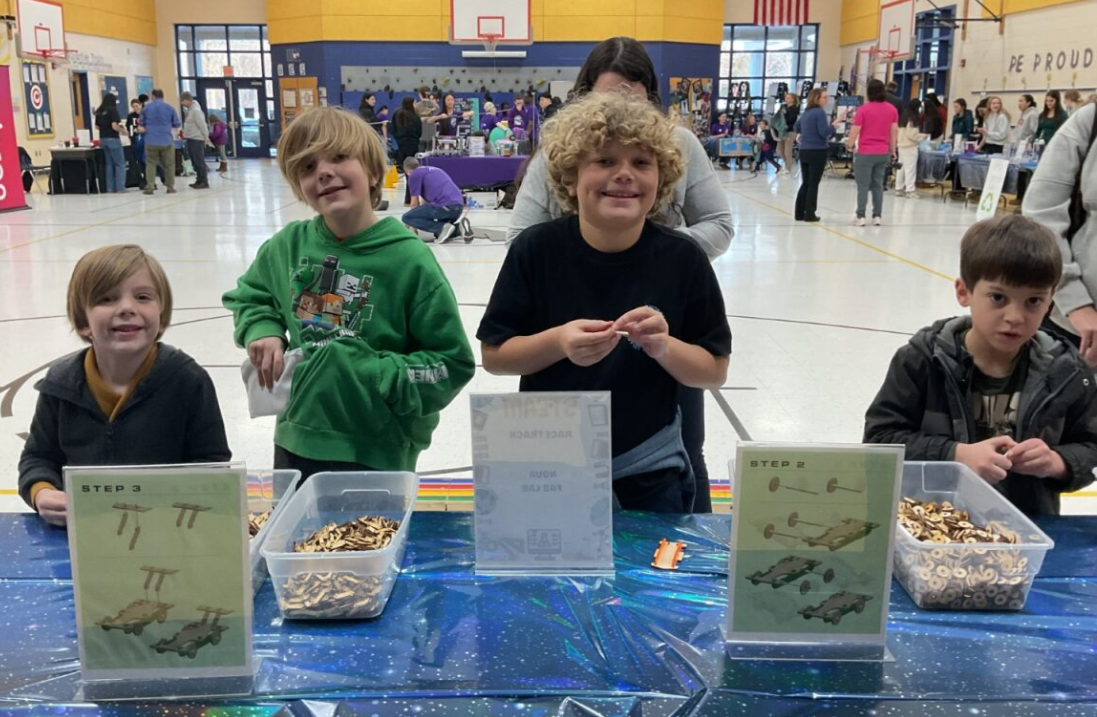
STEAM Night at J.W. Alvey Elementary in Haymarket united students and families for an evening of hands-on exploration. Through interactive activities, demonstrations, and experiments, the event showcased the wonders of science, technology, engineering, arts, and math. By making learning fun and accessible, STEAM Night successfully sparked curiosity, creativity, and critical thinking within the school community.